Minimalist Muscle: The Ultimate Full-Body Dumbbell Workout
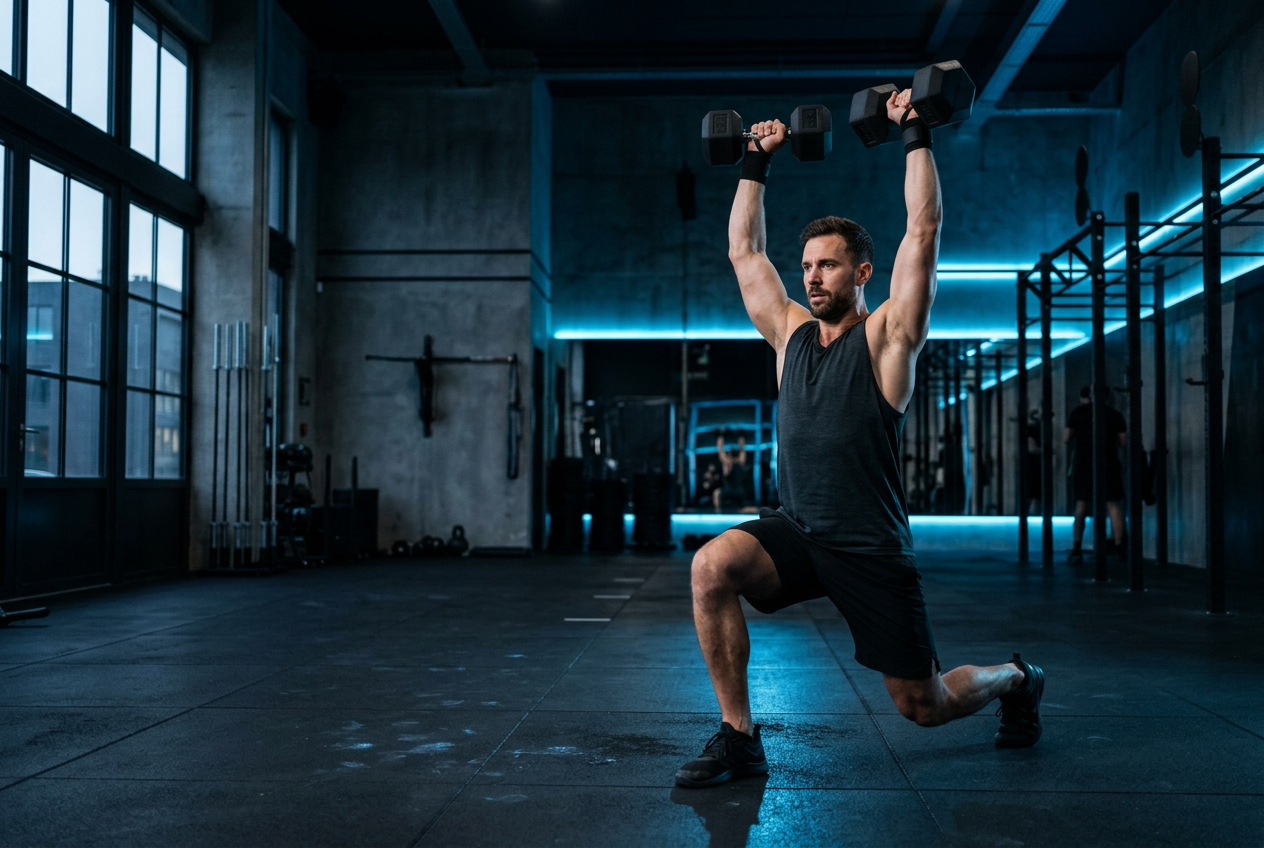
In the world of fitness, complexity is often mistaken for effectiveness. We see elaborate machines, crowded gyms, and specialized equipment, assuming they are prerequisites for a great physique. But what if I told you that one of the most effective tools for building strength, muscle, and athleticism has been hiding in plain sight? I'm talking about the humble dumbbell.
As a sports scientist, I've seen firsthand how simplicity, applied with scientific principles, yields the best results. A well-structured, dumbbell-only full-body routine is a powerful weapon in any fitness arsenal. It's efficient, versatile, and incredibly effective. This guide will break down the science of why dumbbells work so well and provide you with a template to build muscle and strength anywhere, anytime.
Why Dumbbells Reign Supreme for Full-Body Training
While barbells have their place for lifting maximal loads, dumbbells offer unique advantages that make them superior for balanced, functional, full-body development.
- Unilateral Challenge and Imbalance Correction: Dumbbells force each limb to work independently. This is known as unilateral training. If you have a strength imbalance where one side is stronger than the other (which is common for most people), a barbell can mask it; the stronger side simply takes over. With dumbbells, each arm or leg must stabilize and lift its own load. This not only reveals and corrects imbalances but also dramatically increases core activation and stability demands, leading to more resilient, functional strength.
- Enhanced Range of Motion and Joint Health: Unlike a fixed barbell or machine path, dumbbells allow your joints to move through their natural, intended range of motion. During a dumbbell press, for example, your hands can rotate and travel along an arc that feels most comfortable for your shoulder joint. This freedom of movement can reduce stress on the wrists, elbows, and shoulders, making it a joint-friendlier option, especially for long-term training longevity.
- Unmatched Versatility and Accessibility: With just one pair of adjustable dumbbells, you can perform hundreds of exercises. From heavy squats and deadlifts to presses, rows, and lunges, the possibilities are vast. This makes them the perfect centerpiece for a home gym or a go-to tool in a busy commercial gym. With an endless variety of movements targeting every muscle group, dumbbells are a complete gym in your hands. You can see the sheer diversity of options in the SmartyWorkout exercise library.
The Principles of an Effective Full-Body Workout
Simply picking up dumbbells and moving them around isn't a plan. An effective program is built on proven scientific principles. For a full-body routine, three pillars are non-negotiable.
First is Movement Pattern Balance. A great workout should train movements, not just muscles. We structure workouts around these core patterns to ensure you're building a balanced, functional body:
- Squat: Lower-body knee-dominant movement (e.g., Goblet Squat)
- Hinge: Lower-body hip-dominant movement (e.g., Romanian Deadlift)
- Push: Upper-body pressing (e.g., Dumbbell Bench Press, Overhead Press)
- Pull: Upper-body pulling (e.g., Bent-Over Row)
- Lunge: Unilateral leg movement (e.g., Reverse Lunge)
Second is Optimal Frequency. Research on muscle protein synthesis (MPS)—the process of building new muscle—shows that it remains elevated for roughly 24-48 hours after a resistance training session. By training the whole body in one workout and repeating it 2-3 times per week with a rest day in between, you can stimulate MPS for each muscle group multiple times a week. This is often a more effective stimulus for growth compared to a traditional "bro split" where each muscle is only hit once weekly.
Finally, and most importantly, is Progressive Overload. To get stronger and build muscle, you must consistently challenge your body beyond its current capacity. This doesn't just mean lifting heavier. With dumbbells, you can apply progressive overload in several ways:
- Increasing the weight.
- Performing more repetitions with the same weight.
- Performing more sets.
- Decreasing rest time between sets.
- Improving your technique and control (tempo).
This is where intelligent programming becomes crucial. A well-designed plan automates progressive overload, ensuring you’re always challenged appropriately. At SmartyWorkout, we’ve codified these principles into our platform; you can see how it works to build your perfect session every time.
The Ultimate Dumbbell-Only Workout Template
Here is a sample full-body workout that hits every major movement pattern. Perform this routine 2-3 times per week on non-consecutive days (e.g., Monday, Wednesday, Friday). Aim for a weight that challenges you to complete the target rep range while maintaining perfect form. Rest 60-90 seconds between sets.
- 1. Goblet Squat: 3 sets of 8-12 reps
- 2. Dumbbell Romanian Deadlift (RDL): 3 sets of 10-15 reps
- 3. Dumbbell Bench Press (or Floor Press): 3 sets of 8-12 reps
- 4. Bent-Over Dumbbell Row: 3 sets of 8-12 reps per side
- 5. Seated Dumbbell Overhead Press: 3 sets of 10-15 reps
- 6. Dumbbell Reverse Lunge: 3 sets of 8-12 reps per side
Exercise Spotlight: Technique & Common Faults
Executing an exercise with poor form is not just ineffective; it's a recipe for injury. Let's focus on two key movements from our template.
Bent-Over Dumbbell Row: This is a powerhouse for building a strong, thick back and improving posture. The key is to initiate the pull with your back muscles, not your arms.
- Setup: Hinge at your hips until your torso is nearly parallel to the floor, maintaining a flat back. Let the dumbbell hang directly below your shoulder.
- Execution: Brace your core. Drive your elbow up and back towards your hip, thinking about pulling your shoulder blade towards your spine. Avoid yanking the weight with your bicep or rotating your torso.
- Common Fault: A rounded lower back. You must maintain a neutral spine. If you can't, the weight is too heavy or you need to work on your hip hinge mechanics.
Seated Dumbbell Overhead Press: This exercise is fantastic for building strong shoulders, but poor form can cause impingement. We'll use a neutral grip (palms facing each other) to prioritize shoulder health.
- Setup: Sit on a bench with back support. Hold the dumbbells at shoulder height with your palms facing each other and elbows pointing forward, slightly in front of your torso.
- Execution: Brace your core tightly to prevent your lower back from arching. Press the dumbbells straight overhead until your arms are fully extended but not locked out. Control the weight on the way down, returning to the starting position.
- Common Fault: Arching the lower back excessively. This shifts the load to your spine and indicates a lack of core stability or shoulder mobility. Keep your ribcage down and your glutes squeezed.
Programming and Long-Term Progress
A single workout is just one piece of the puzzle. Long-term success is about stringing those workouts together into a coherent plan. Your goal each week should be to beat your previous performance in some small way—one more rep, a slight increase in weight, better form.
Track your workouts meticulously. Write down the exercises, weight, sets, and reps you perform. This data is your road map. Without it, you're just guessing. A simple schedule of performing this workout on Monday, Wednesday, and Friday provides an excellent balance of stimulus and recovery.
As you advance, you might introduce different exercises, change rep schemes, or add intensity techniques. A comprehensive program manages all these variables for you, ensuring you never plateau. To see how these workouts fit into a comprehensive, long-term strategy, you can explore our approach in the main training hub.
Dumbbells are more than just a convenient option; they are a superior tool for building a balanced, resilient, and powerful body. By focusing on fundamental movement patterns, applying progressive overload, and prioritizing perfect technique, you can use this minimalist approach to achieve maximal results. Stop waiting for the perfect gym and start building strength today.